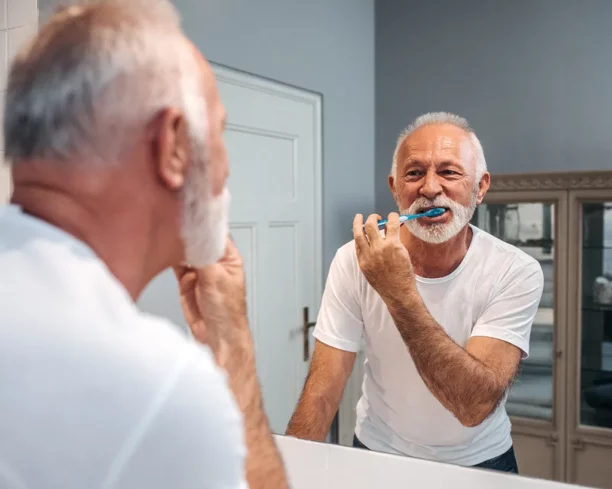
Brushing teeth is crucial throughout life, and in a care facility it must be as thorough as at home, because it contributes to general health by preventing tooth decay, infections and gum disease.
Poor oral hygiene can worsen existing health problems, such as cardiovascular disease and diabetes. In addition, healthy, well-preserved teeth support a better diet and therefore contribute to the proper absorption of nutrients from food. Regular brushing can also reduce the risk of respiratory infections, which are common in people living with a disability.
Furthermore, good oral hygiene can contribute to a better quality of life by fostering self-confidence and psychological well-being.
It is important to train care staff in techniques to maintain proper oral hygiene and enable appropriate care.
Educational programmes on the importance of brushing teeth can raise awareness among residents and their families, thereby encouraging good oral hygiene practices.
In short, brushing teeth in a medico-social facility is essential to maintain residents' overall health, well-being and quality of life.
To achieve this, it is essential to understand the “why” in order to implement the “how”, along with the appropriate care and monitoring protocols.
Learning objectives of the course
- Improve residents' oral hygiene and dental follow-up
- Approaching the patient in daily oral care
- Learning to assist with brushing, specific care techniques, equipment and methods
- Know how to identify inadequate brushing, a gum or dental problem
- Know how to initiate care and when to refer to a healthcare professional
- Provide keys to help the team become autonomous in passing on knowledge in this area
- Know the factors that contribute to poor oral hygiene
- Know the clinical signs of the main oral diseases
- Understand the specific nature of oral diseases in psychiatry
- Know how to identify the side effects of psychotropic medication
- Understand pain in psychiatry and how to manage it during oral care
Detailed programme – 7 hours
1 – The importance of teeth and specific features
- Description of the person,
- Approaching the person,
- The functions of the mouth and how it is experienced,
- Factors contributing to poor oral hygiene,
- Clinical signs of oral diseases (pain),
- Side effects of medication,
- Diagnosing inadequate brushing,
- Brushing teeth, loss of function,
- The food bolus,
- Saliva,
- Sleep,
- Dental follow-up and chewing.
2 – Oral hygiene
- Dental plaque,
- Diagnosing a gum or dental problem,
- Assessing how effectively residents brush and adapting if necessary,
- Adapt brushing for a person other than oneself,
- Positions, equipment, brushing techniques, and tips for maintaining good oral hygiene,
- Write an adapted individual brushing protocol (prosthesis, bleeding, diet),
- Adapt nutrition to support good digestion.
Accessibility
On request, this course can be adapted for participants with disabilities. For videoconference sessions, help with connecting to our Teams software will be sent to you along with your course invitation.
Quality indicators
98% of participants are satisfied with this course.
90% of participants recommend this course.